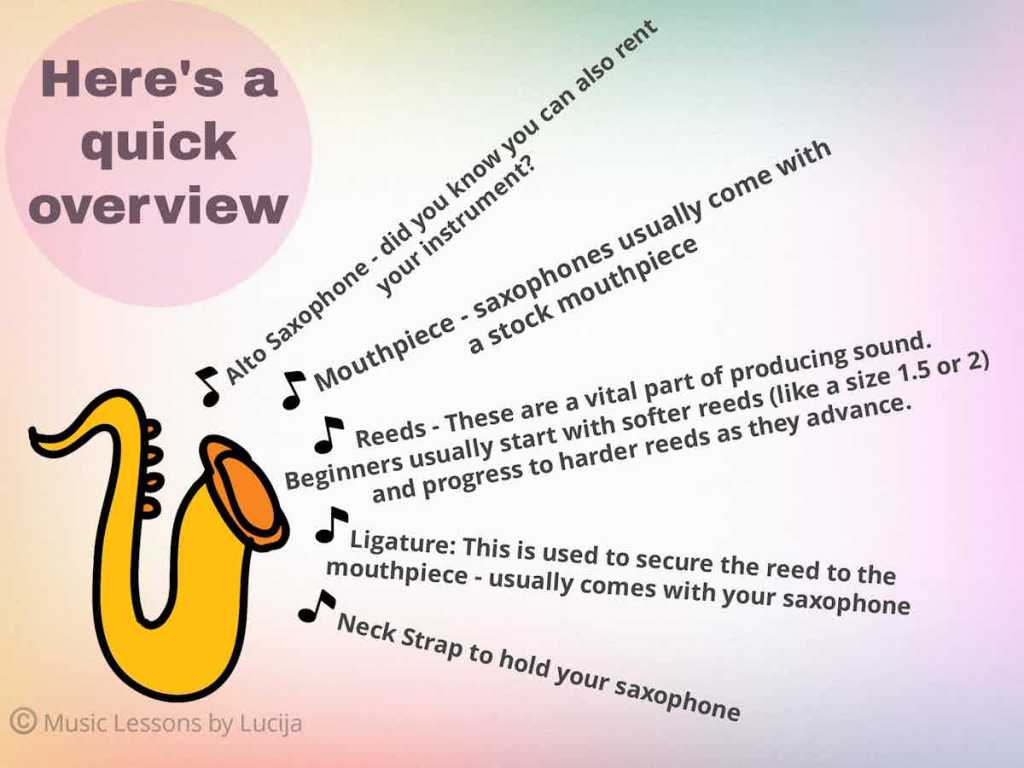
Let’s jump in
Even though the saxophone family consists of four main instruments, soprano, alto, tenor and baritone, two are much friendlier for a beginner player. The Alto and Tenor. How do you know which one you should start on, you wonder? Well, it’s usually the alto, especially for children. It’s smaller than tenor and it will take a bit less air to produce the sound, not to mention the difference in weight. And transitioning between different saxophones once you can play the alto, will be easy enough. So even for adult beginners that’s usually the way to go.
Getting a saxophone doesn’t need to cost a fortune
Before you can have your first lesson you will of course need the instrument. And buying one before you even have your first lessons sounds expensive. Not to mention, where should you even start? So luckily there are other options. I always encourage my students to simply rent one at the beginning. It’s cost efficient, many places offer rent-to-buy programs and you get everything you need to start learning. These are some places in Berlin, Germany I would recommend:
- Die Holzbläser
- Mike Duchstein Saxophon-Service
- Vollmer Instrumentenservice (one some of my students tried out and were very happy with the service)
Should a store ship an instrument to me?
Some stores offer to have the instrument shipped to you. As practical as that is more often than not, students who had their instruments shipped, showed up to their lesson and the instrument wasn’t working. The saxophone’s mechanism is delicate and intricate, and it relies on a precise alignment of keys, rods, pads, and tone holes to produce the right notes. Any slight shift or misalignment in this setup can lead to problems, including leaks (where air escapes from where it shouldn’t), difficulty in pressing keys, and incorrect sounds. Saxophones can be sensitive to bumps and knocks, so if you can, take the time and pick up the instrument in person.
LETS TALK REEDS
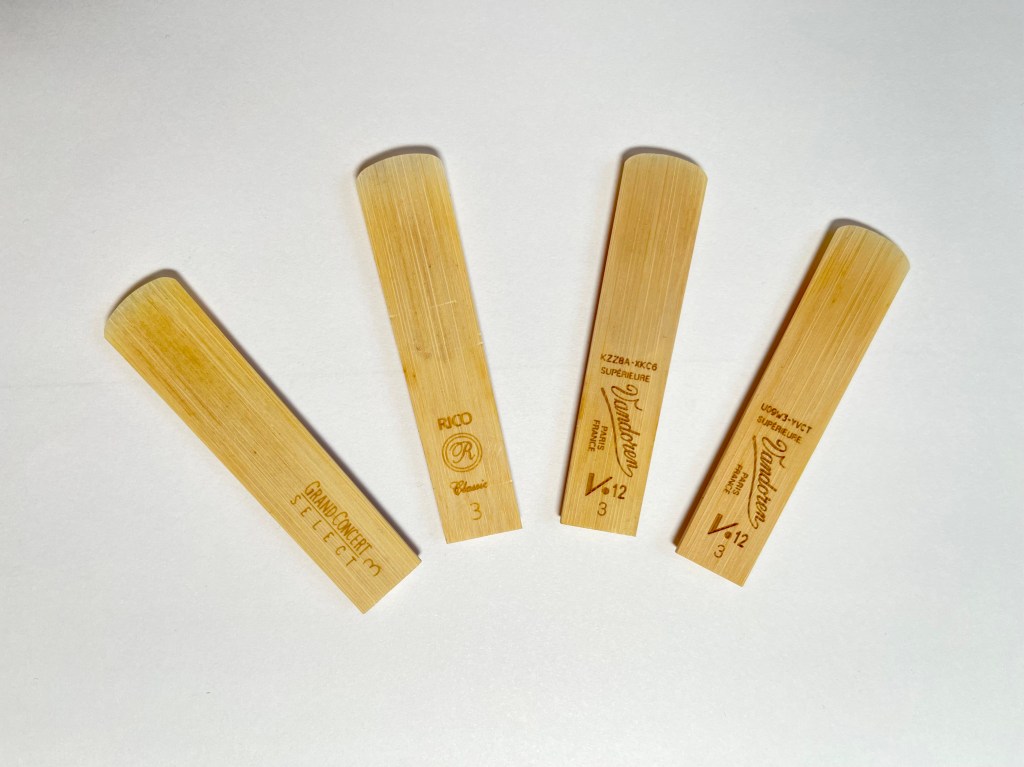
Reeds play a very important part, without them our instrument wouldn’t be able to produce a sound. They are that wooden little thing (it’s actually bamboo) that will be mounted on the mouthpiece.
Reeds are a huge topic for every saxophonist. When they’re good our hearts sing, when they’re bad they drive us nuts and take all the joy out of the practice.
So having a good reed is imperative. It’s important to note that reeds in every box will vary a bit and sometimes you will find some good ones and some bad ones.
With time you will learn which reed suit you most, I advise you to try different brands and different models throughout your learning process.
Reeds & Reed thickness
You will notice reeds and their boxes are marked by the numbers. The bigger the number, the harder or thicker the reed is. So higher numbered reeds (number 3.0+) will require a lot more air pressure coming from the player (you) when trying to produce the sound.
When buying, it’s good to know you do not have to purchase the whole box (that does not apply for online retailers). Typically a whole box contains 10 reeds and you won’t know if they’re right for you until you try. So instead you can opt for a couple reeds of different thicknesses. I suggest you grab a few 1.5, 2.0 and 2.5.
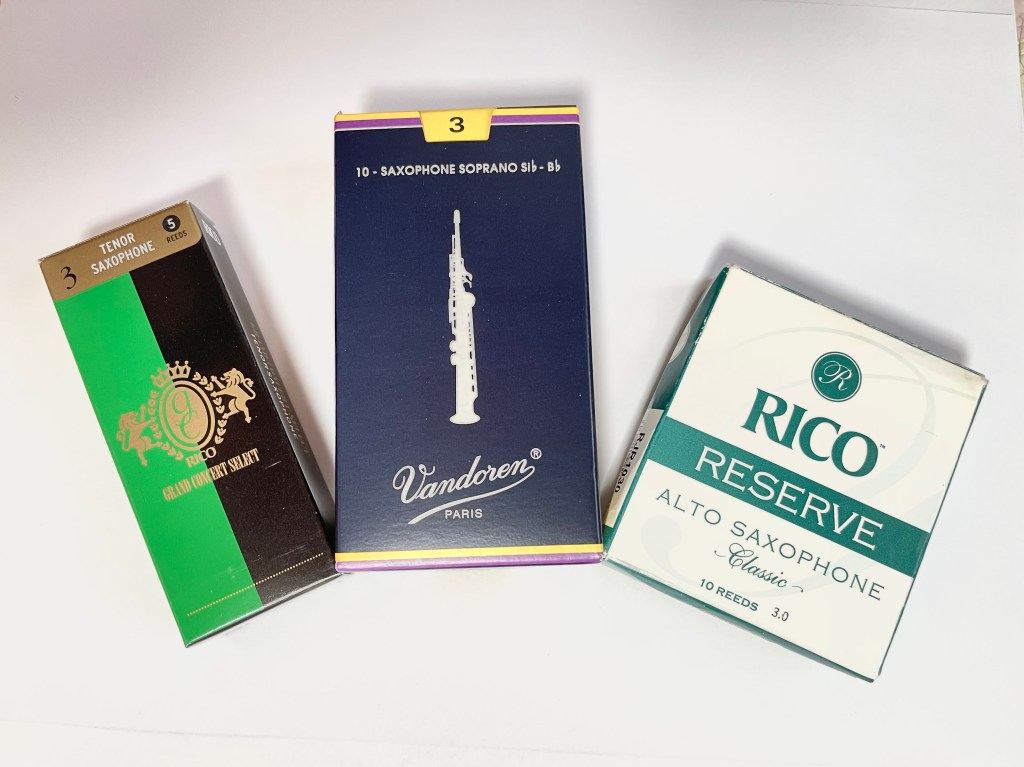
Here are some good ones to start with:
- Daddario Woodwinds Rico thickness 1.5, thickness 2.0, and/ or thickness 2.5
- Vandoren Classic Blue Thickness 1.5, thickness 2.0, and/ or thickness 2.5
MOUTHPIECE & LIGATURE
Mouthpiece is that black piece of plastic you put on the saxophone’s neck, it’s the part where you will secure the reed with the ligature (usually a metal or leather piece that holds your reed). Your saxophone will most likely already come with one. I am not going to lie, they are usually not the beast, but completely fine to start learning with.
As they can cost anywhere between 100 – 200€ (and even more for professional models) they’re an investment, so you want to get it right. My piece of advice – wait before you purchase. Remember, you are an individual, and although I can help you through the selection process, it has to suit you and the instrument you play. Meaning you need to be able to try out different models and recognize what you like, which one will help you to produce the best sound and which one is going to feel the best for you. So give it some time, then you and your teacher can find the right mouthpiece for you.
NECK STRAP
Saxophones are a bit heavy, so we need something to support the weight to be able to hold it while playing. Most saxophones do come with some kind of a neck strap for you to use. Besides straps we can also use a harness which offer more comfort to players.
These are a few options, and as usual I advise you to try a few different styles, but here are some of my favorites:
- Zappatini Strap Regular Tragegurt für Saxophon, they also have the size for children and a Large size – great for dispersing the weight, I feel absolutely no pressure on my neck when using this strap. Plus it also comes in white and I love using that one for concerts where I wear a white shirt. I absolutely love this one, it’s great for playing standing up or sitting down and I’ve used it on my alto and tenor, but I imagine I’d love it for playing the baritone sax as well
- Jazzlab saXholder PRO – at a lower price point than Zappatini, it offers an excellent weight disbursement, is also completely adjustable and folds small enough to fit into your sax case
- BG S Saxophon Komforttragegurt, there are three different models – for females, males and children – this is a great budget option. Nothing too fancy but very adjustable and it will take the pressure off your neck. I don’t love using this one when I play sitting down but other than that it’s a great harness. I would recommend it for playing the alto saxophone
That’s it for the start. If you borrow the saxophone you will most likely get everything you need to start the lessons, you will only need to purchase some additional reeds and that will be it.
If you would like to start your path on learning how to play the saxophone, I invite you to book your first lesson with me, here.
This post contains affiliate links. I may earn a commission if you make a purchase at no extra cost to you.
 Music Lessons by Lucija